


Introducing: VERA SACRA

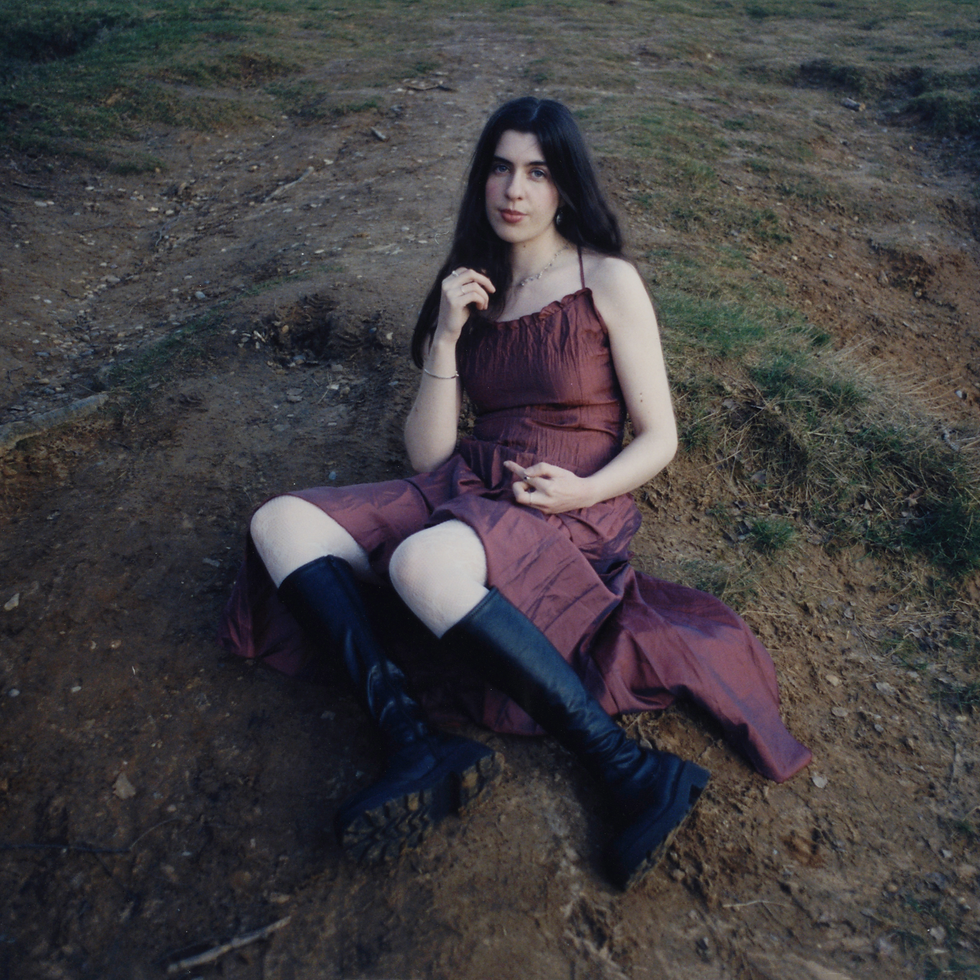
With her cello as compass and liminality as muse, VERA SACRA is charting out dream pop’s most spectral new frontier. On “when the world’s unkind” — the third single from her debut EP sacred spring — the Sheffield-based cellist and producer offers a meditation on love as refuge, threading her signature live-looped strings through ghostly electronics and intimate vocals. It’s a sound born in bedrooms and borderlands: shaped by years of constant movement, flickering identities, and a deep-rooted belief in the power of tenderness.
1. “When the world’s unkind” feels like both a personal refuge and a broader meditation on love in turbulent times. What was the moment or feeling that sparked the writing of this track?
Over the past two years I’ve lived between Sheffield, London, Riga and Tallinn. The process each time involved leaving people and places behind and having to constantly re-orientate myself. At the same time as constantly moving, it felt like everyday the news was becoming darker and I felt a sometimes overwhelming level of powerlessness. ‘when the world’s unkind’ represents the escape from the world you can find in others, and the colour loved ones bring into your otherwise grey everyday.
2. You’ve spoken about liminality — of being in-between cities, identities, and emotional states — as a core theme in sacred spring. How does that sense of transience shape your creative process, both lyrically and sonically?
There is a certain romanticisation to the concept of a home/bedroom studio setup which relies on the idea that you have a constant home. As I’ve relocated my life so frequently over the past two years, it has meant that this physical relocation has impacted my creative process. From having limited gear and no cello while in the Baltics to having to record quiet and whispery vocal takes late at night while living with flatmates in my tiny London flat, each track was recorded differently due to the place I was in at the time. I’ve also woven some of the different spaces into my music, from the more obvious field recordings between some tracks - of street preachers and Latvian train announcements - to using environmental sounds to build textures like in ‘if you’ve got her too’ which uses tube escalator sounds in the end section, and the birds in ‘burning’ which were outside my childhood bedroom window.
Change is a big theme in the EP and the name ‘sacred spring’ actually stems from an ancient italic ceremony ‘Ver Sacrum’ (Latin for ‘sacred spring’). This was a ritual sacrifice based around the concept that during times of strife, animals and produce of an upcoming spring should be sacrificed to a deity in return for future fortune. There is this idea that with loss there is rebirth into something else. While it’s a kind of grim ceremony, I’ve always been deeply affected by the change of season, the beauty of new life and the struggles of winter darkness. I really connect with the concept that sometimes when things seem dark in the present they can be necessary for what comes next. I also like that in English ‘sacred spring’ could also refer to a sort of source of sacredness.
The tracks ‘burning’ and ‘if you’ve got her too’ are deeply linked to this theme of seasonal change and the human-earth relationship. ‘when the world’s unkind’, ‘end to end’ and ‘haunting’ all explore the emotional challenges of change and seeking comfort in others. There is quite a liminal feeling to the production of the songs, all made with limited production skills and resources - it feels like some of the tracks struggle with balancing all the elements, there is a kind of chaos to the way they unfold. Some of the tracks were written 2-3 years ago, and I can definitely hear how much I’ve come on in production when I listen to my newer demos, however I like the chaos and exploration captured in these tracks.
3. Your use of cello feels almost like a second voice — weaving in and out of your vocals, grounding and unravelling emotion. What role does the instrument play in how you express memory and emotion in your work?
I love this description! Because cello was my first instrument, when I write I’m often already thinking about how I could add cello, just like people would think about adding guitar/keys parts. The cello has a range not dissimilar to the human voice, which is why I think for many it carries so much emotion. I love layering up cello to make it sound like large, almost orchestral string sections, sometimes layering 6-8 cellos. I also love experimenting with different techniques - on ‘burning’ you hear more metallic sounds and harmonics, on ‘when the world’s unkind’ it’s lyrical and orchestral, on ‘end to end’ it’s percussive and spiky. The cello definitely brings a certain emotional depth and warmth to a lot of my tracks, helping with the reflective feelings of a lot of my lyrics. With ‘sacred spring’, all of the cello parts were written on top of existing parts, rather than the songs being built around the cello. In my live sets I’ve started building a world much more centered around cello and improvisation, and I’m excited to bring that more into future music. People seem to connect particularly strongly to my music when I strip everything back to just cello & voice.
4. The visualiser for “when the world’s unkind” is intimate and lo-fi, yet beautifully surreal. What drew you and Sonya Shpynova to analogue techniques, and how do you see the visual world of VERA SACRA evolving?
I’ve enjoyed film photography for a long time due to the way it seems to be able to capture the feeling of a moment in time. When I look at my film pictures they seem so much more vivid than digital images I’ve taken. I like that with analogue mediums you are somewhat restricted with the amount of shots/time you can record with. It forces you to really think before you create something. I recently went on a residency in Cornwall with composer and sound artist Paul Cousins (organised by Dyski). There we all learned about using reel-to-reel tape as a compositional tool, which is something I’m really excited to incorporate into my future work.
Sonya and I met a few years ago through a mutual friend and I actually didn’t properly speak with her for a couple of years but we followed each other online. I saw she was learning how to use film video cameras and was really interested in shooting in film format, which we planned, but due to time and cost constraints we ended up filming on DV tape instead. The footage has a distinctively 80s feel to it and feels really dreamy I think, working well with the kind of nostalgic sound I’ve gone for on the track.
Someone else who has contributed greatly to the visual world of VERA SACRA is my friend Celia Croft. Celia also works with analogue formats and makes beautiful, often surreal and otherworldly images out of the everyday. For the ‘sacred spring’ artwork we shot just herself and I, walking around forests on the outskirts of London. Her pictures for this EP have captured the depth of my feelings of dislocation so well. I think we are both quite drawn to strange, liminal, between-spaces and so the visual world came quite naturally.
The future visual world of VERA SACRA will probably depend on the direction I take my new music. For now, I still see myself making music in this quite dark yet spiritual realm, so I hope I can work again with some of the people who have helped me build such strong visuals for this project.
5. You’ve built a live show that blends live-looped cello, electronics and voice — equal parts fragile and immersive. How do these performances influence or reshape your studio recordings, if at all?
When you make music which is quite electronic, it’s always difficult when it comes to live music deciding which parts and how many parts to play live. I think that if someone comes to see you live, they want an experience they couldn’t get just by listening to your recorded music, so I’ve made a real effort to build ‘live’ versions of my songs. There is a rigidity that I don’t like to working with backings - I much prefer being able to push and pull my songs around. All of my live shows involve live looping, which is often improvised. I love that this means each time my performances are slightly different. There are certain pieces that have emerged as parts of my live set that began as improvisations. In the future I'm hoping to capture the essence of my live improvisations and looping in a recorded format, but I think it's really difficult. I'm drawn to the idea of recording things in one take where possible.


Comments