


INTRODUCING: Lemon Power

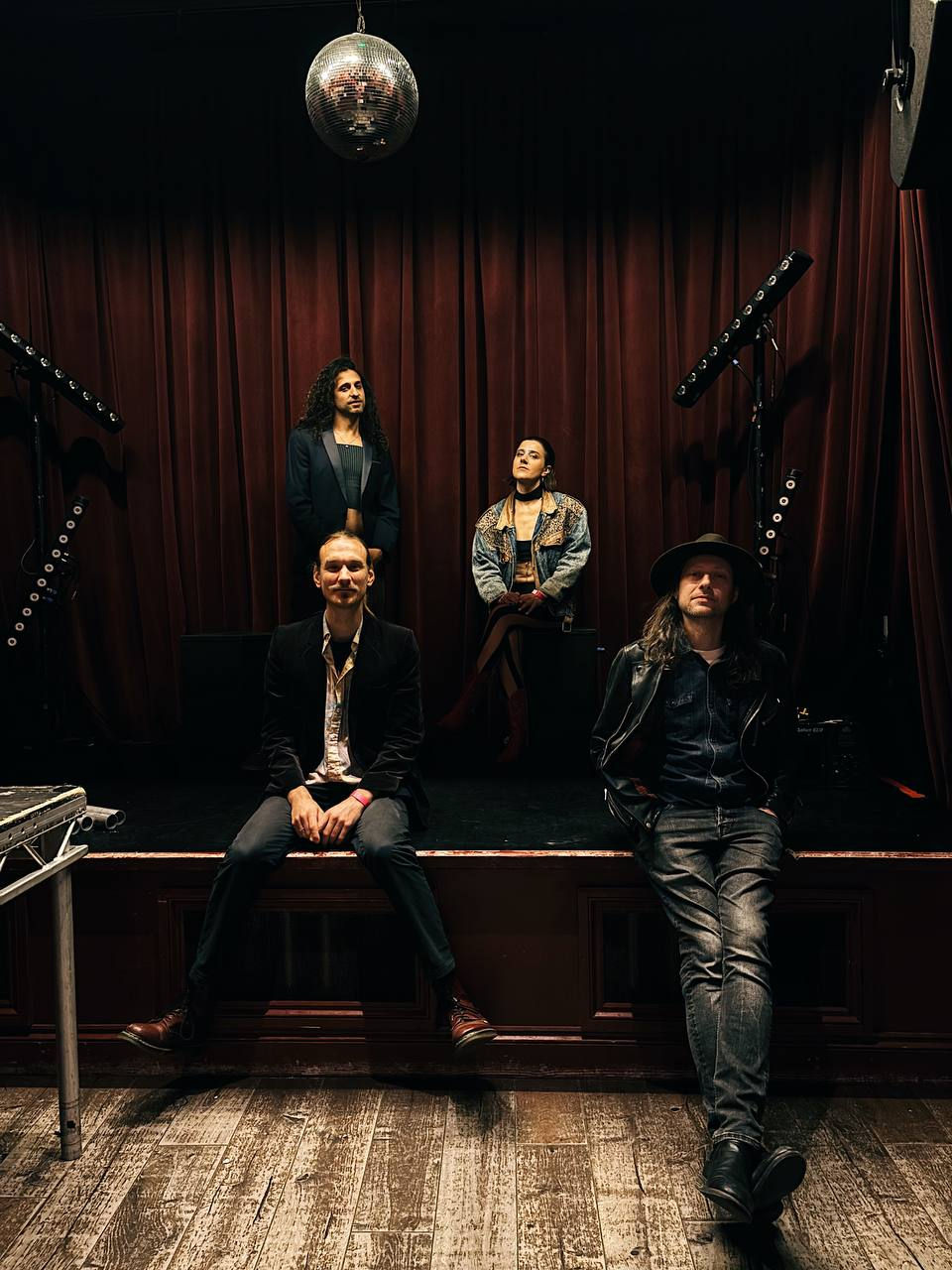
Inspired by a month travelling through Tangier, Morocco, with a Mexican artist and her cat, Interzone is less a destination than a psychological terrain. Fronted by Sere, Lemon Power set out in search of a place charged with magic — somewhere able to transfix, confuse, and inspire.
Tangier revealed itself as terraces and cafés, prayers and wind, light and ocean. A historic collision point of artists, pirates, merchants, overlapping nationalities and underworlds — everywhere and nowhere at once. A city haunted by its former status as an International Zone and mythologised through the writings of William S. Burroughs.
Back in the studio, Lemon Power translated that sense of limbo into sound: seven shifting bass and drum patterns forming the foundation for evolving vocal melodies and lyrics drawn from journals, fragments, and Burroughs’ Interzone. The result is a six-minute spiral — hypnotic, unstable, seductive — inviting listeners to lose themselves inside a place that exists as much in the imagination as it does in reality. Welcome to the Interzone.
1. Interzone feels less like a place and more like a state of mind — a dead-end limbo that’s seductive and unsettling at the same time. What does “Interzone” represent for you personally?
I see it as a place of contrast, tension, chaos, filth, magic and mystery all existing at once. It’s full of possibility. A place where your inner world and your outer world are both true at the same time.
For me, the Interzone is ultimately a place of exploration.
2. The track was inspired by a month in Tangier with a Mexican artist and her cat, searching for somewhere “charged with magic.” Did that magic ever reveal itself, or did the search itself become the point?
I see life as a continuous search for the self. Every year, I try to spend a month immersing myself in a different way of life and stepping outside my comfort zone. I was curious as to why so many artists, musicians and writers had spent time in Tangier, and I wanted to understand that pull for myself.
It wasn’t until I arrived that I learnt about the Tangier International Zone, which became the inspiration for Interzone. It was a strategically important place by the Strait of Gibraltar, with a special status under several European powers. It became an intense melting pot of people trafficking all kinds of things: information, culture, sex, riches, and more. You can still feel traces of that era, even though much of it has gone. That legacy really stayed with me.
I found magic in the people, in the history, in the geology and landscape, in the sea, the winds, the light.
I think you can find magic anywhere. But Tangier is one of those places where you don’t really have to look for it.
3. You reference Burroughs’ Interzone and themes of immorality, intrigue, and overlapping worlds. How did those ideas translate from literature and travel into sound and structure in the studio?
Tanger started with the music. In one writing session, we decided to experiment with bass and drum patterns as the foundation and see where they took us. Even though it goes against all the advice about how to be “successful” in a world of short attention spans and endless scrolling, we still make music in a way that feels intriguing to us. We all bring different skills and perspectives, and when we get into the studio we let whatever needs to come out, come out.
I had just returned from Morocco, having absorbed a lot of traditional music, the work of Paul Bowles and Burroughs, and the history and atmosphere of Tangier itself. I didn’t realise at the time how deeply that was influencing me. As the melodies and movement started coming from the ground up, it felt like that entropic energy had slipped into all of us.
Slowly, the melodies, vocal lines and guitar parts began to take shape. There were Arab influences, but also speed, overlap and sudden shifts. Tempo changes mirrored those overlapping worlds.
When it came to the lyrics, I went back to notes and quotes I had written in my journal, including from Interzone. I pulled out fragments, sentences, words and sounds, and let them sit inside the music. Nothing was overly intentional, but our experiences were quietly guiding everything. It was only afterwards that we realised just how much the song embodied the mythological spirit of Tangier. Travel, literature and other art forms are so important for artists. They keep the creative well from running dry.
4. Musically, the song evolves through seven shifting bass and drum patterns over nearly six minutes. How deliberate was that sense of spinning and loss of control, and how did you stop chaos from taking over completely?
Lemon Power naturally drifts into chaos and then gently pulls itself back into something more ordered. I think that is part of music itself. There is always some kind of structure, whether you cling to it tightly or let it loosen.
In the end, it comes down to a shared understanding between the players, something that happens in a specific moment in time. That collective feeling creates its own world. With this song, it feels like a beautiful chaos that carries lots of different emotions, stories and interpretations all at once.
5. The lyric “You’ll never find it when you don’t need it” suggests surrender rather than pursuit. Is Interzone a warning, an invitation, or something in between?
Interzone is an in-between space, like I mentioned earlier, where you are allowed to be whomever you want to be. Interzones are places where you can play with different identities, different versions of yourself, or even create entirely new ones.
It is easy to get lost there, but it is also a place that teaches you a lot. It is not necessarily happy or unhappy. It is simply very alive. Social layers dissolve, and people find themselves sharing moments regardless of where they come from.
That feeling sits at the heart of Lemon Power, and I think it resonates with a lot of independent artists too. At some point, you stop chasing outcomes and surrender to the journey and to the music you actually want to make.


Comments